solo exhibition
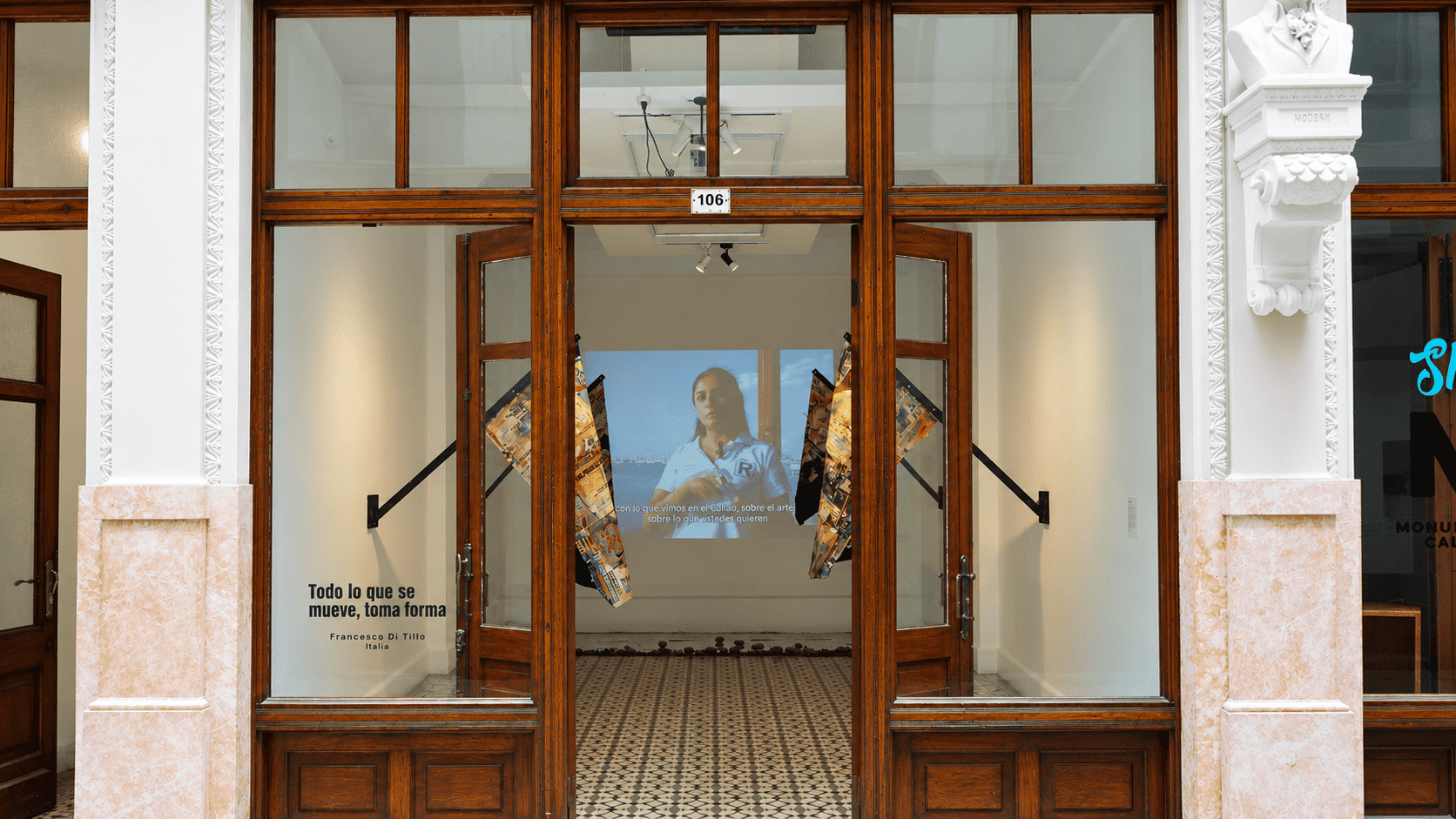
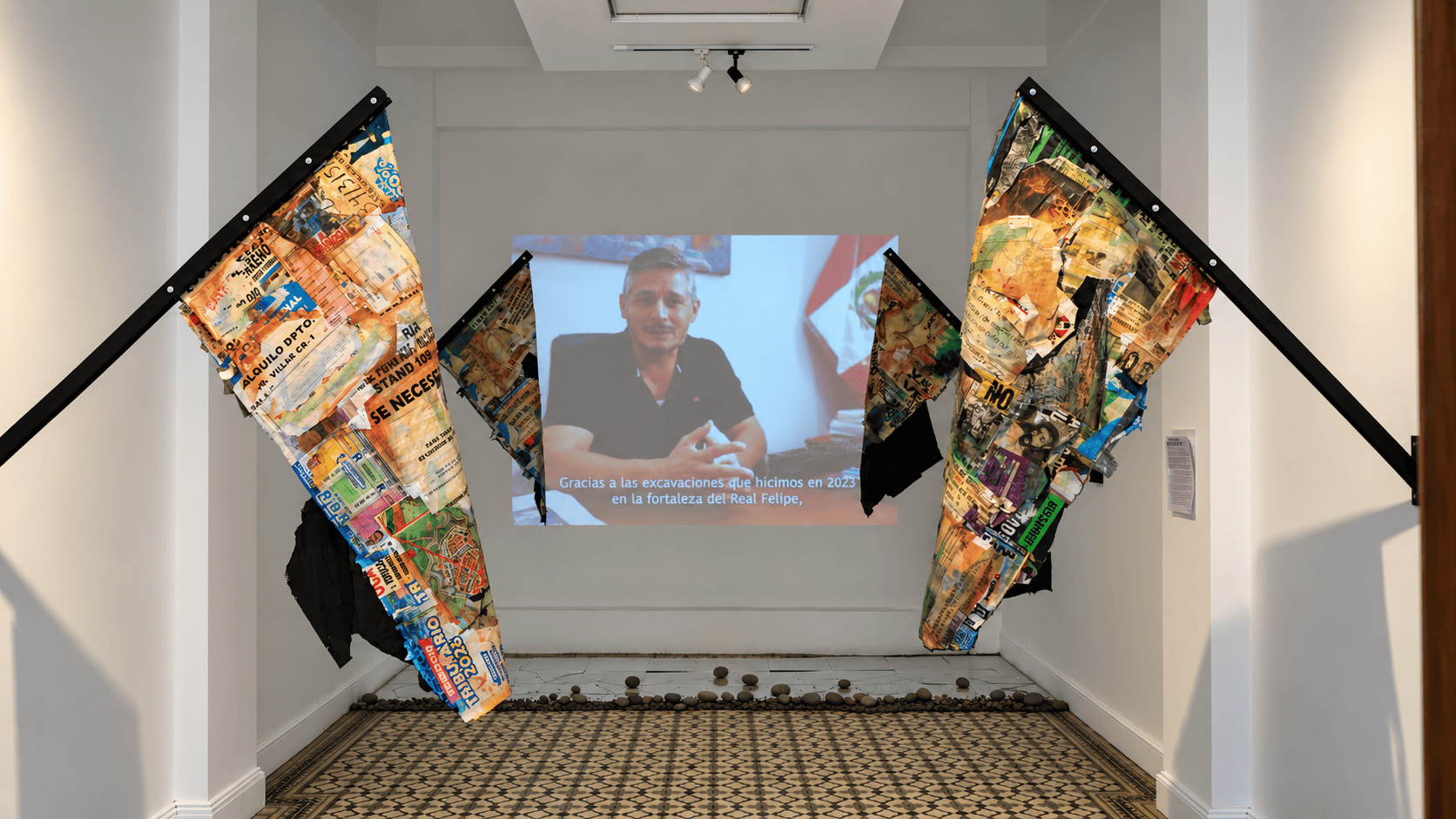
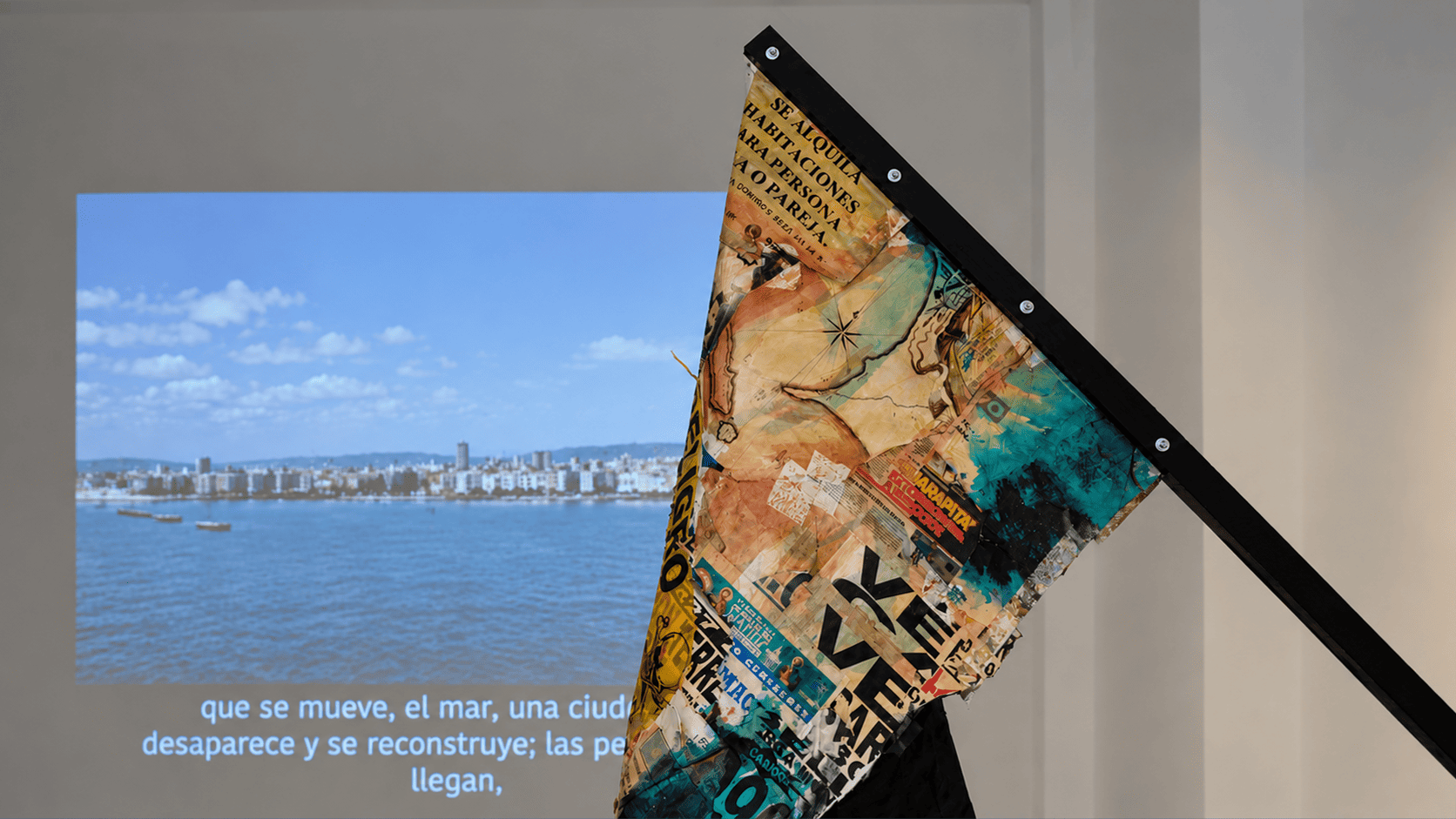
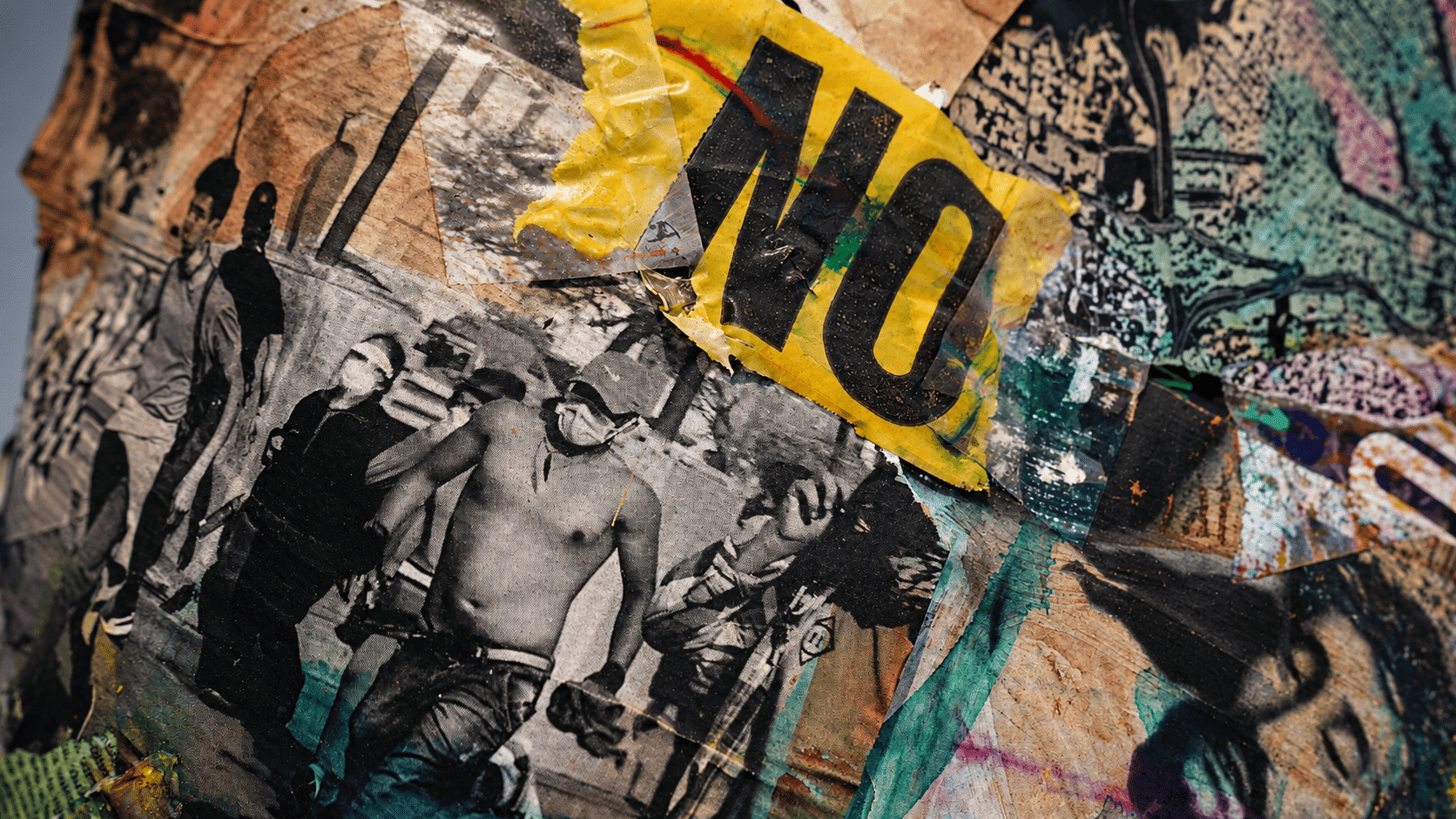
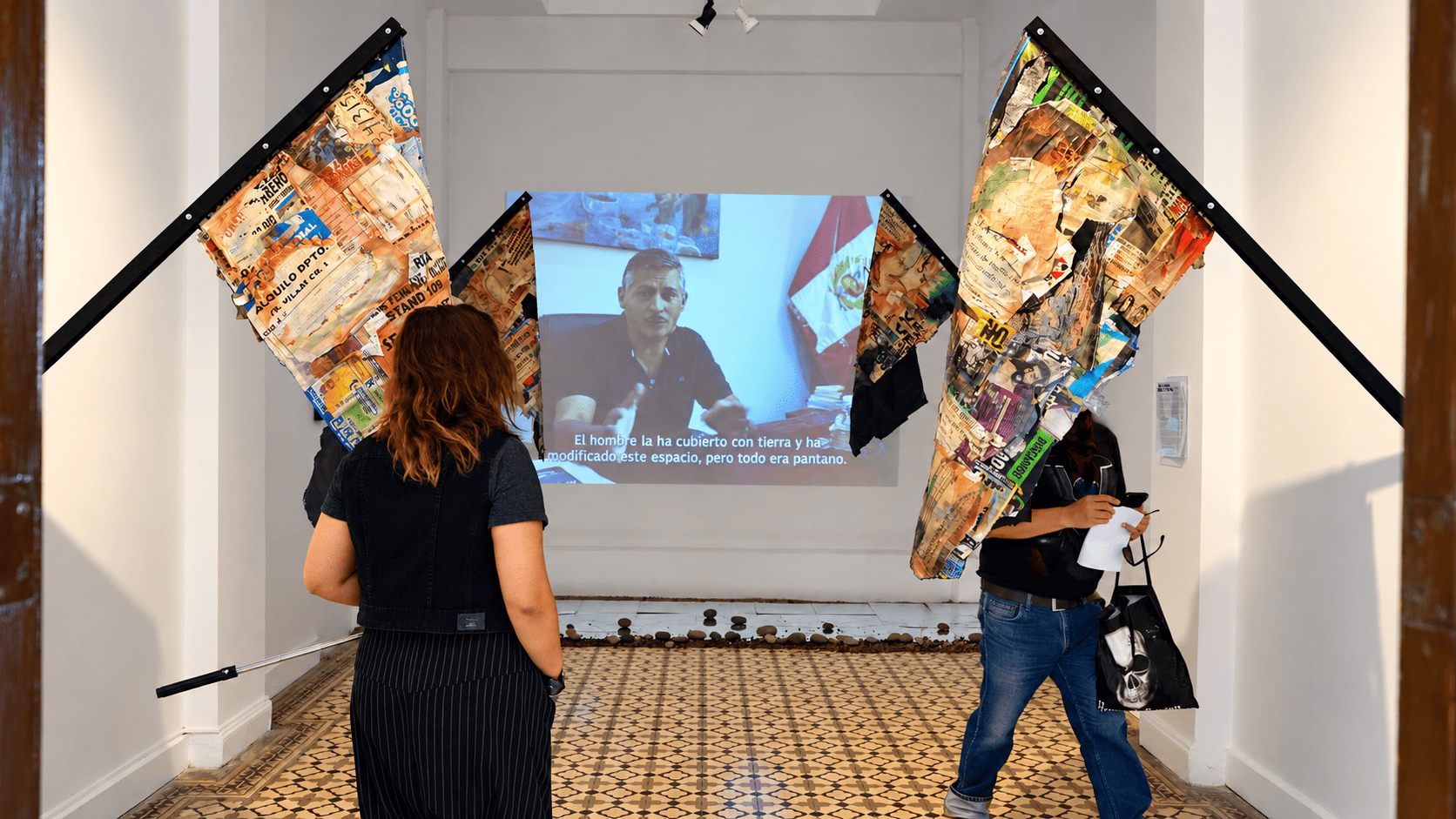
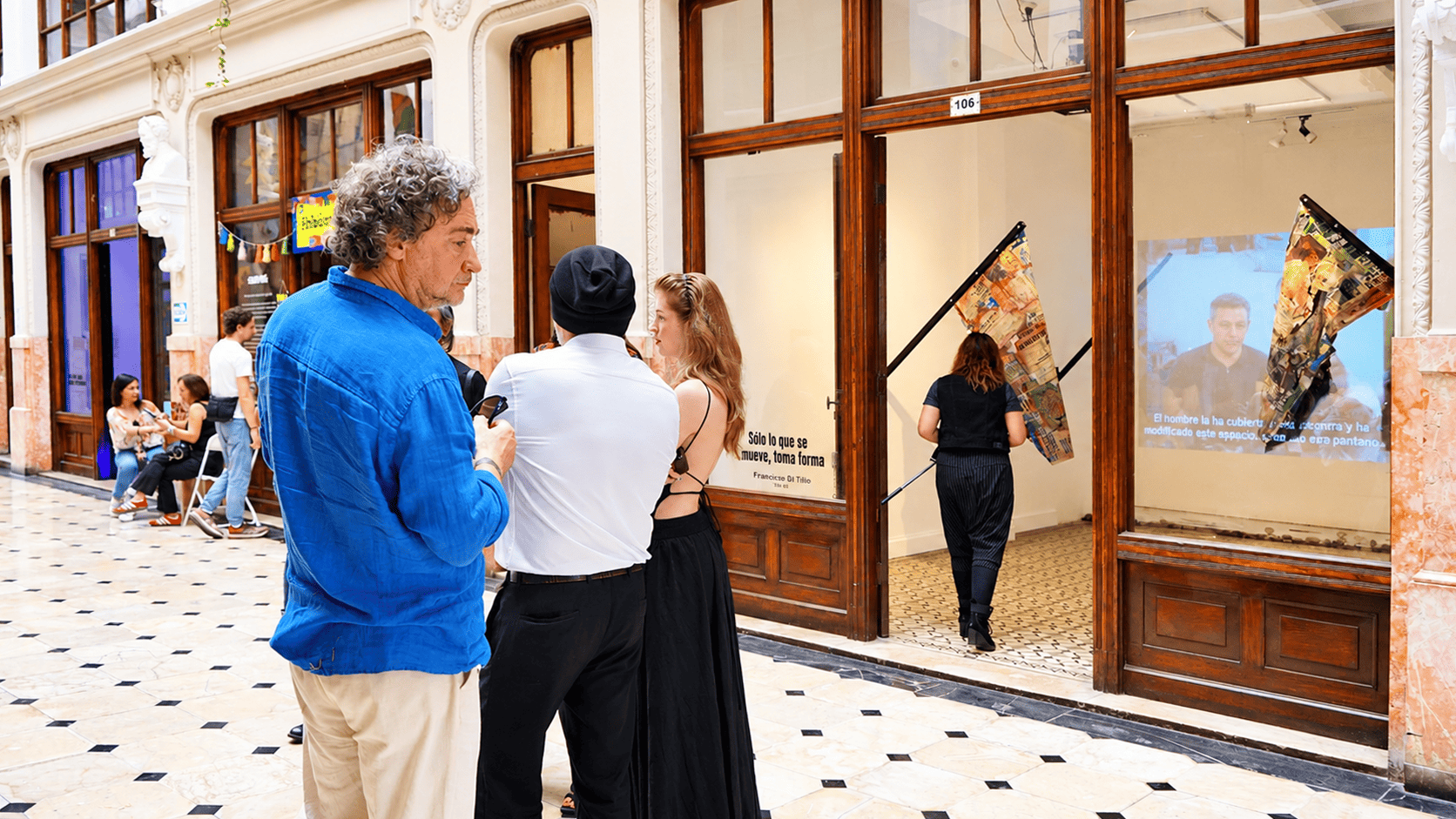
Exhibition view
video-documentary 18", color, dolby sorround
Callao is a threshold: a territory shaped by the encounter between land and ocean, stability and movement, memory and transformation. Here, the sea shapes the coastline, seismic activity runs beneath the ground, and the city continues to redefine its social and cultural identity.
Everything That Moves Takes Shape (Todo lo que se mueve, toma forma) emerges from a period of artistic research and residency in Callao, carried out with the support and collaboration of Asociación Esperanza and Monumental Callao. The project focuses on the lived experience of this territory, while extending its perspective to Peru and, symbolically, to the world. From a specific place, it explores a shared condition: the relationship between the human desire for stability and the forces that continuously transform the Earth, societies, and individuals.
Earthquakes, land subsidence, coastal erosion, and rising sea levels are often perceived solely as threats, ruptures, or manifestations of fragility. The exhibition proposes a shift in perspective. The movement of the Earth is not only destruction: it is also one of the conditions that made life possible. The same energy that breaks, displaces, and transforms can generate new forms, relationships, and possibilities.
In a country like Peru, marked by the powerful presence of natural forces, this condition finds a symbolic reflection in the vitality, creativity, and capacity for transformation of its people and communities. Fragility is neither denied nor celebrated: it becomes an open space, a threshold where vulnerability and resistance, loss and regeneration, the impossibility of control and imagination coexist.
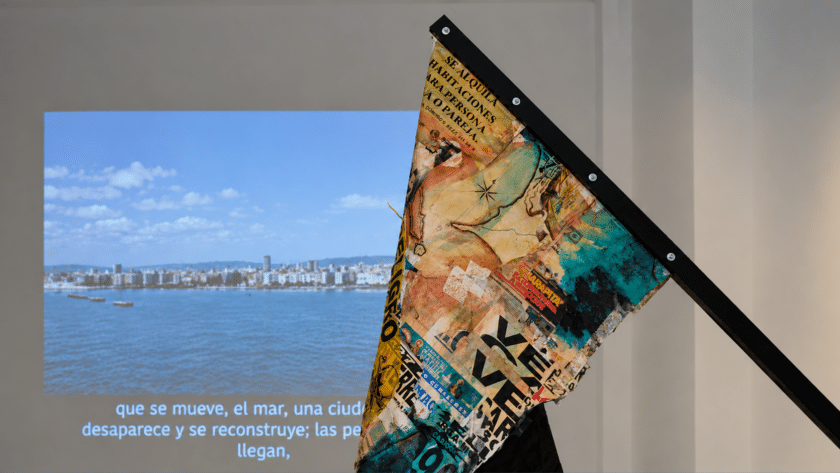
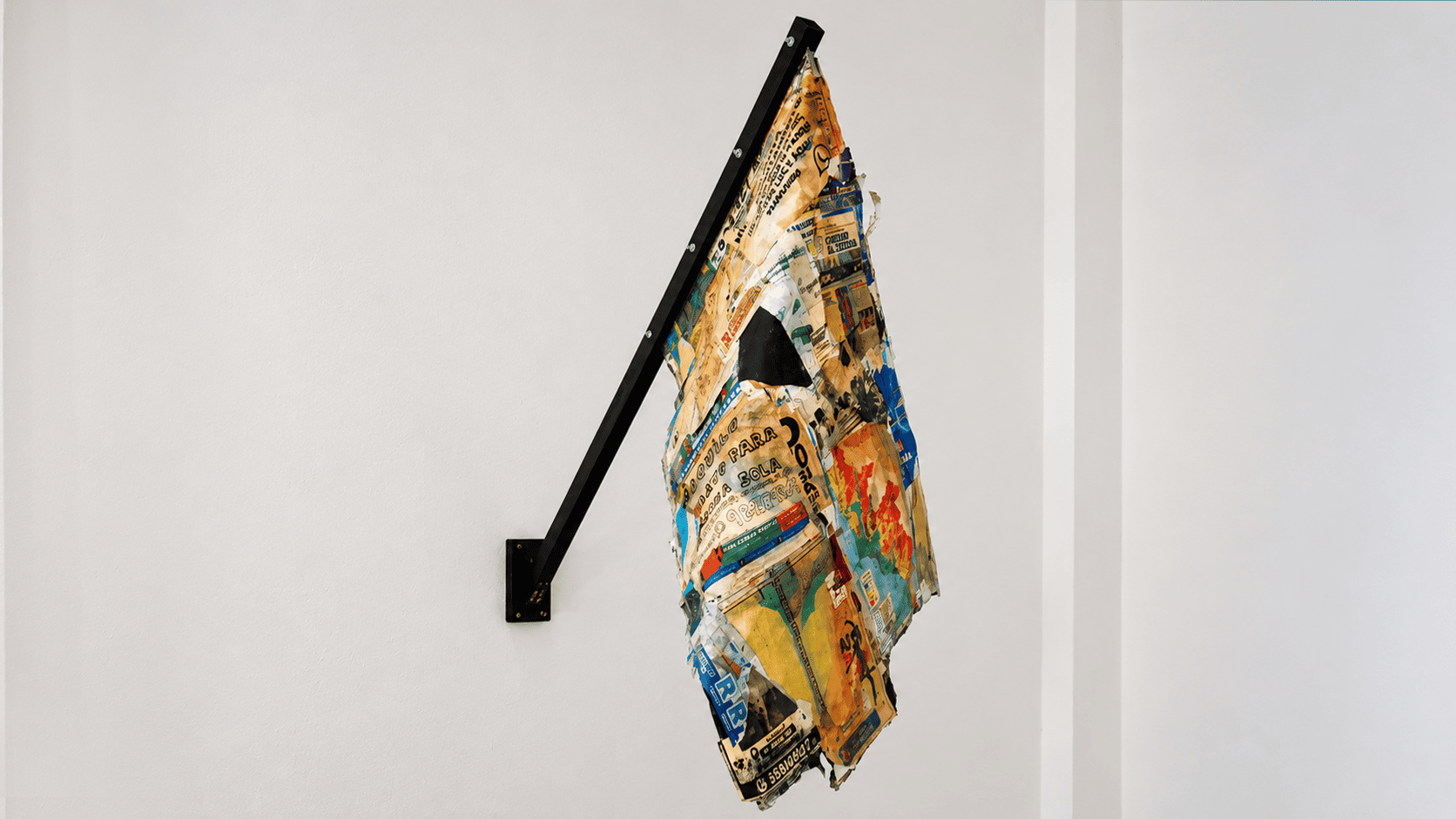
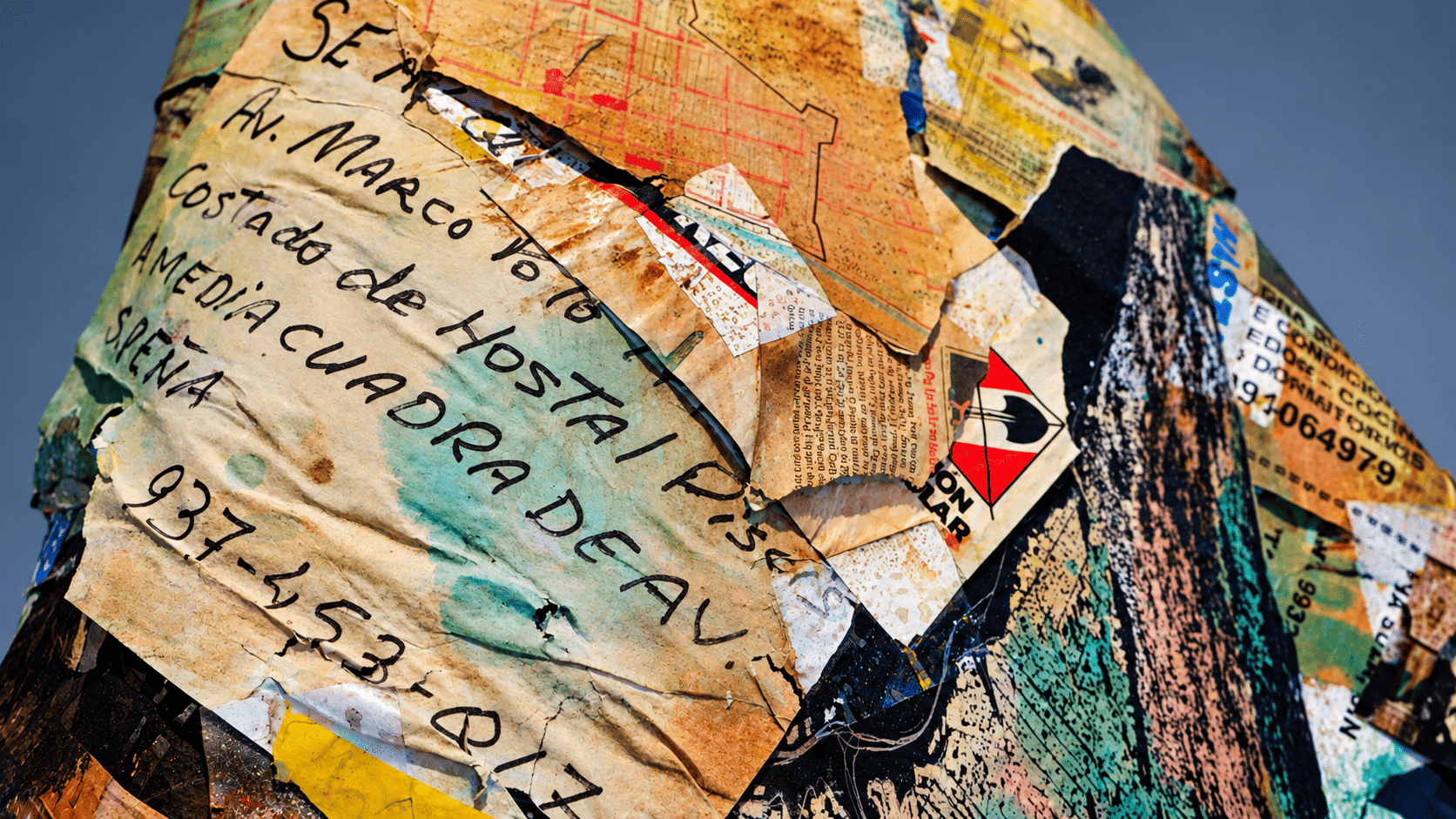
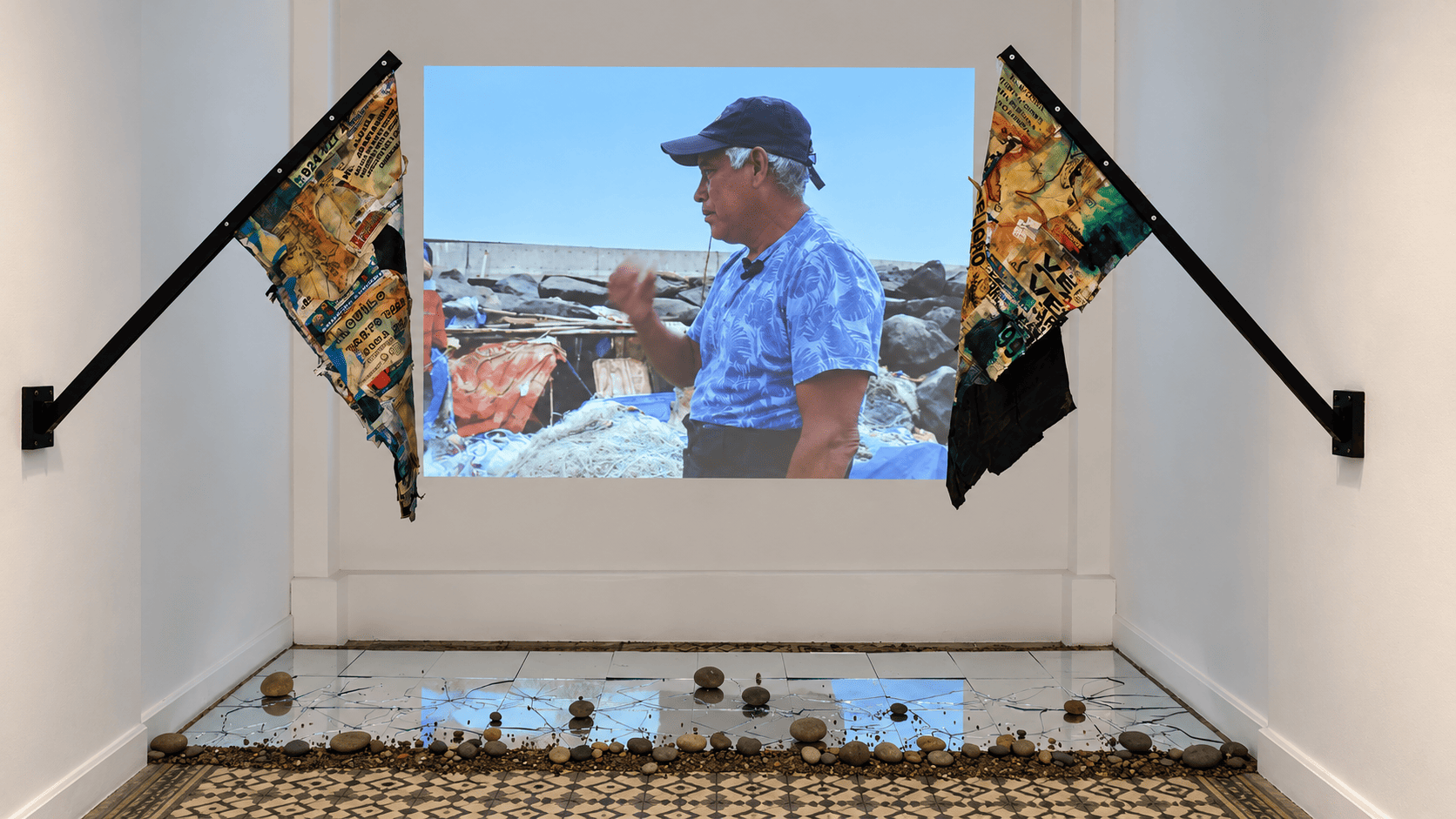
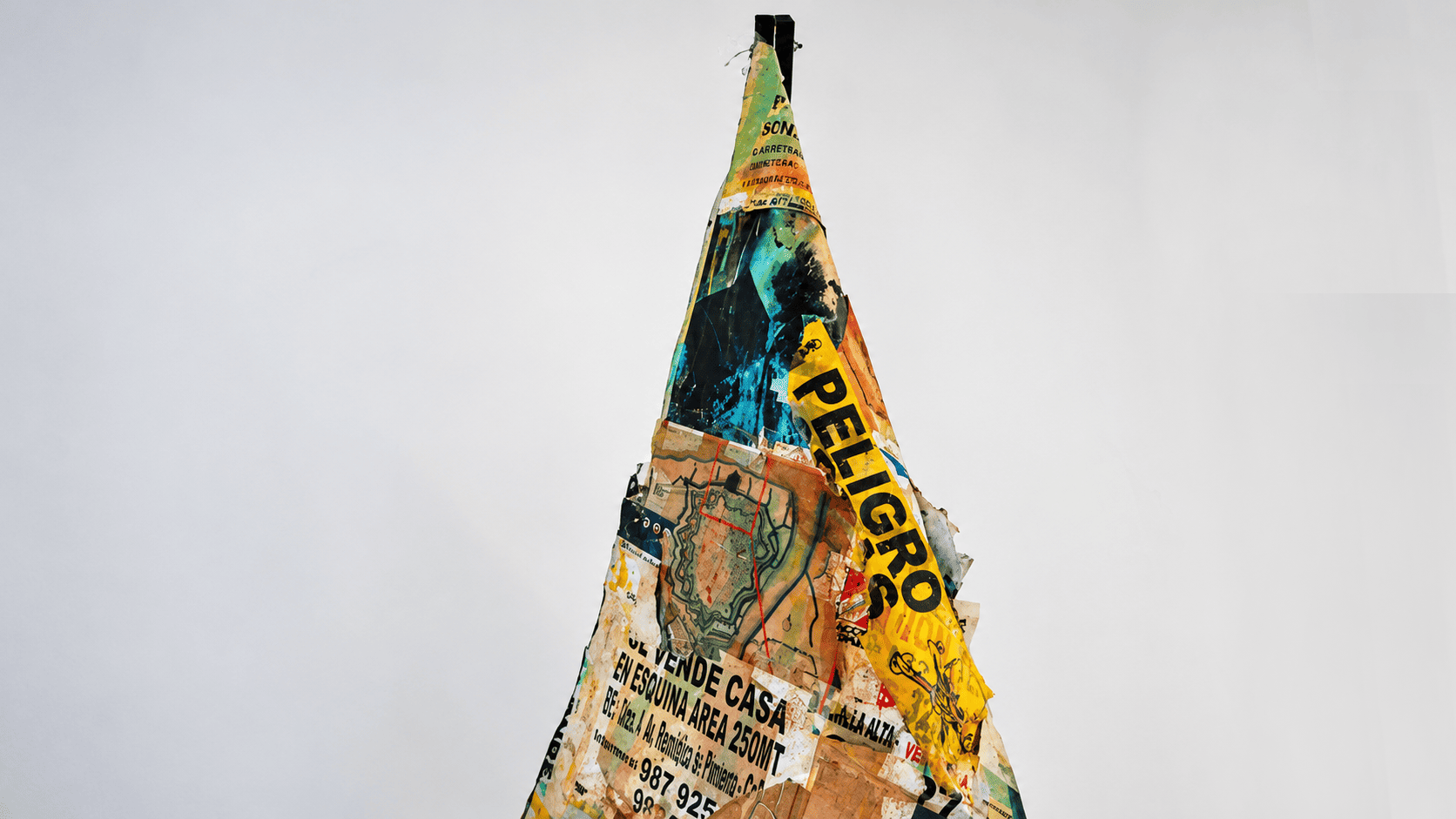
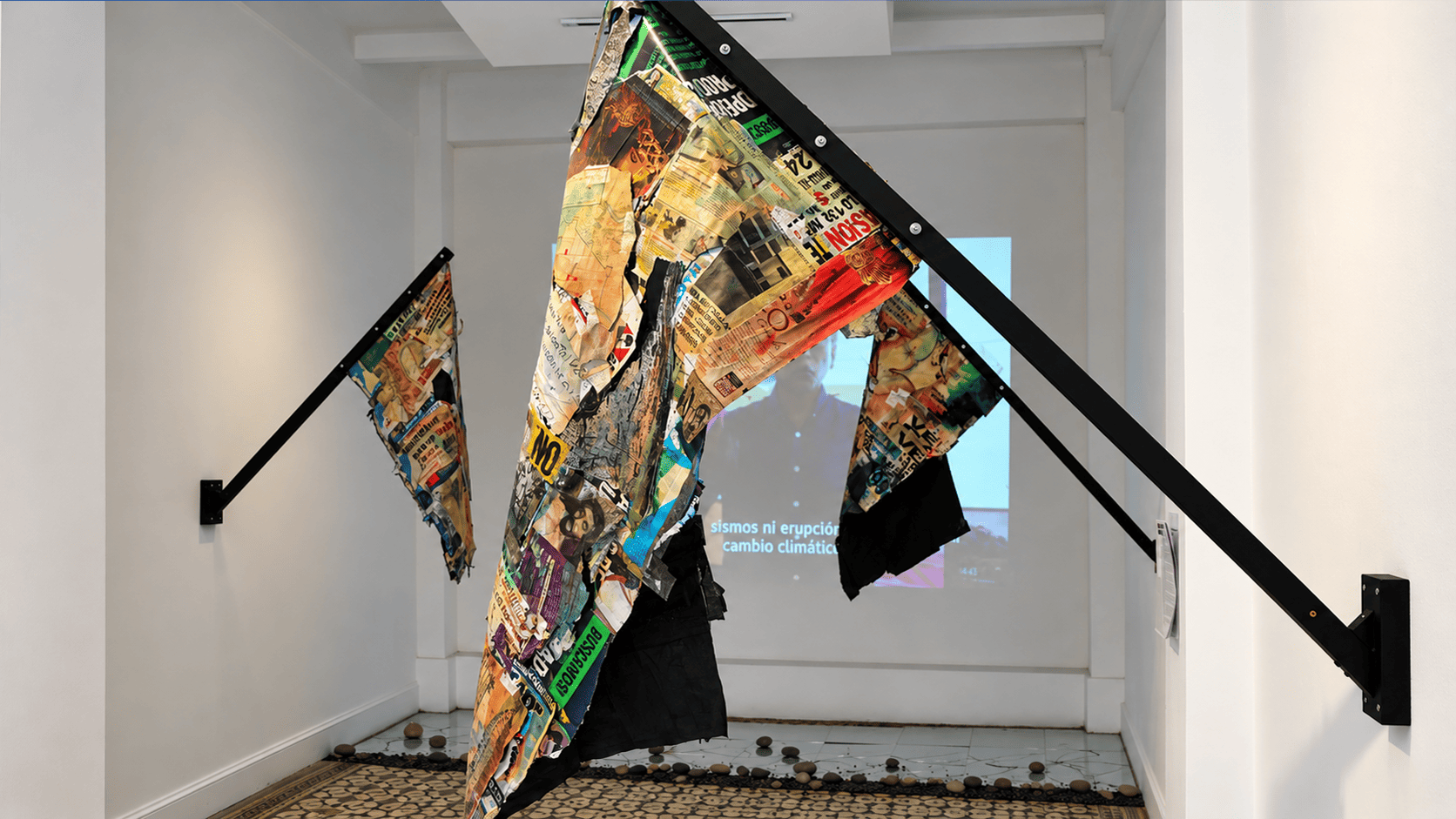
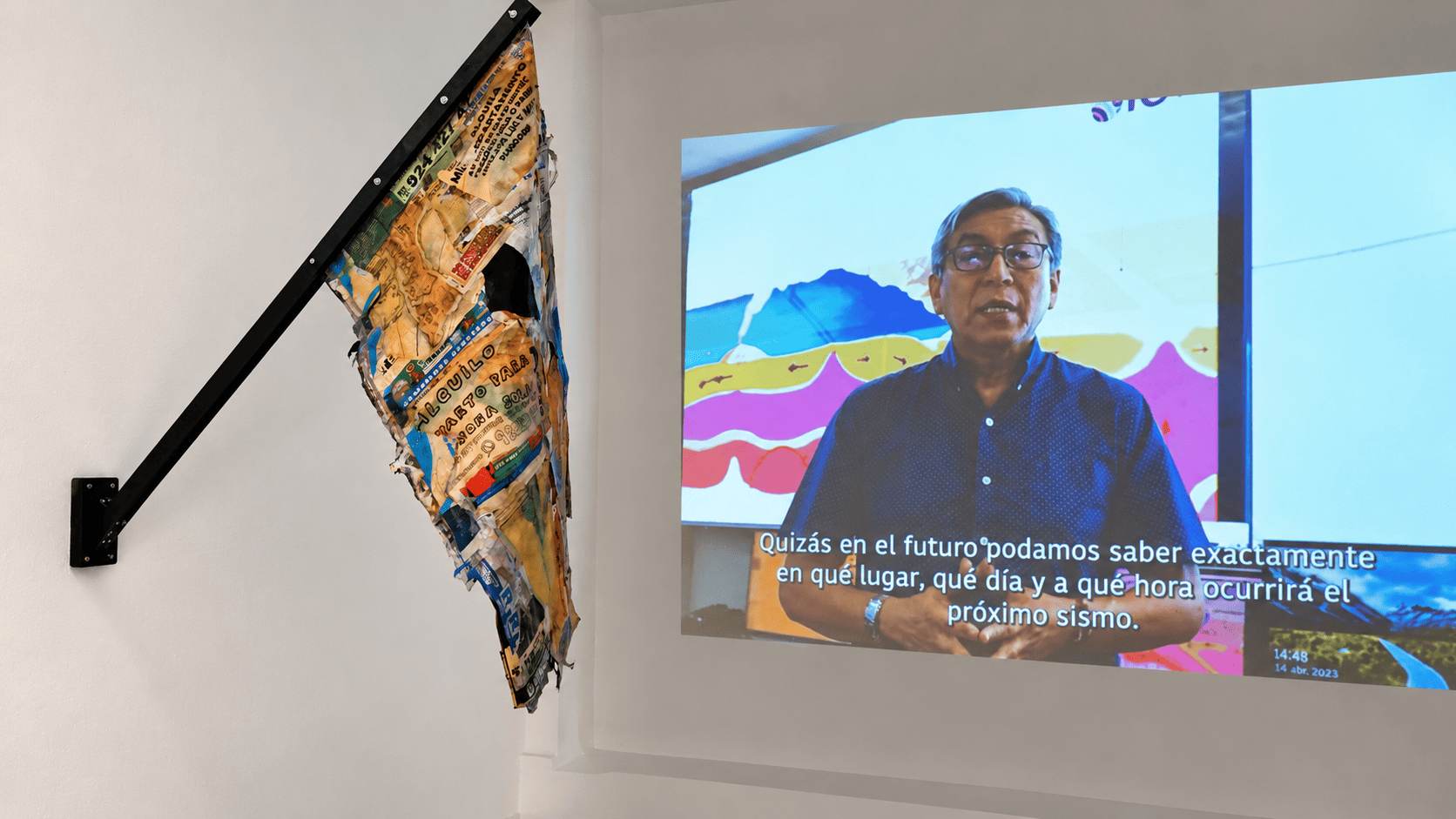
On the walls, four flags made from layered collages bring together posters, announcements, advertisements, institutional communications, photographs, documents, maps, and cartographic materials from past and present. These recovered materials reveal, at least in part, the complexity of everyday life and the many voices inhabiting the urban environment. Overlaid, pasted, torn, and worn by water and time, they lose their original function and become vulnerable skins and incomplete archives: what was meant to be temporary leaves a trace, while what once seemed stable becomes distorted and disappears.
From the entrance, a video work can be glimpsed at the far end of the room. It brings together images, voices, and testimonies arising from encounters with residents, artists, and local figures, including the director of the Geophysical Institute of Peru and archaeologist Benavides, director of the Museum of History and Art of Callao. Scientific knowledge, personal experiences, and collective memories form a polyphonic narrative that begins in Callao, moves through Peru, and opens symbolically onto the world.
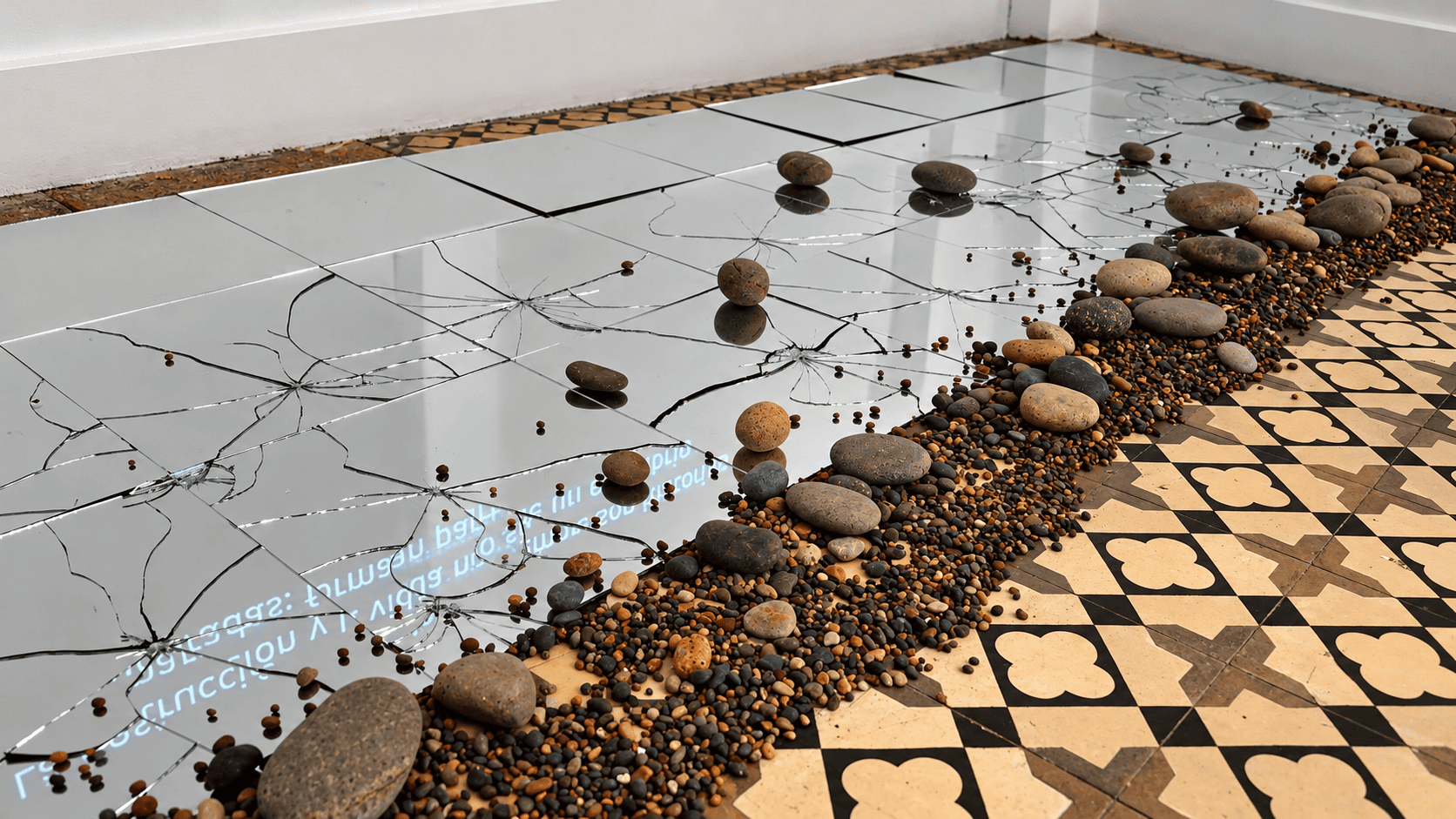
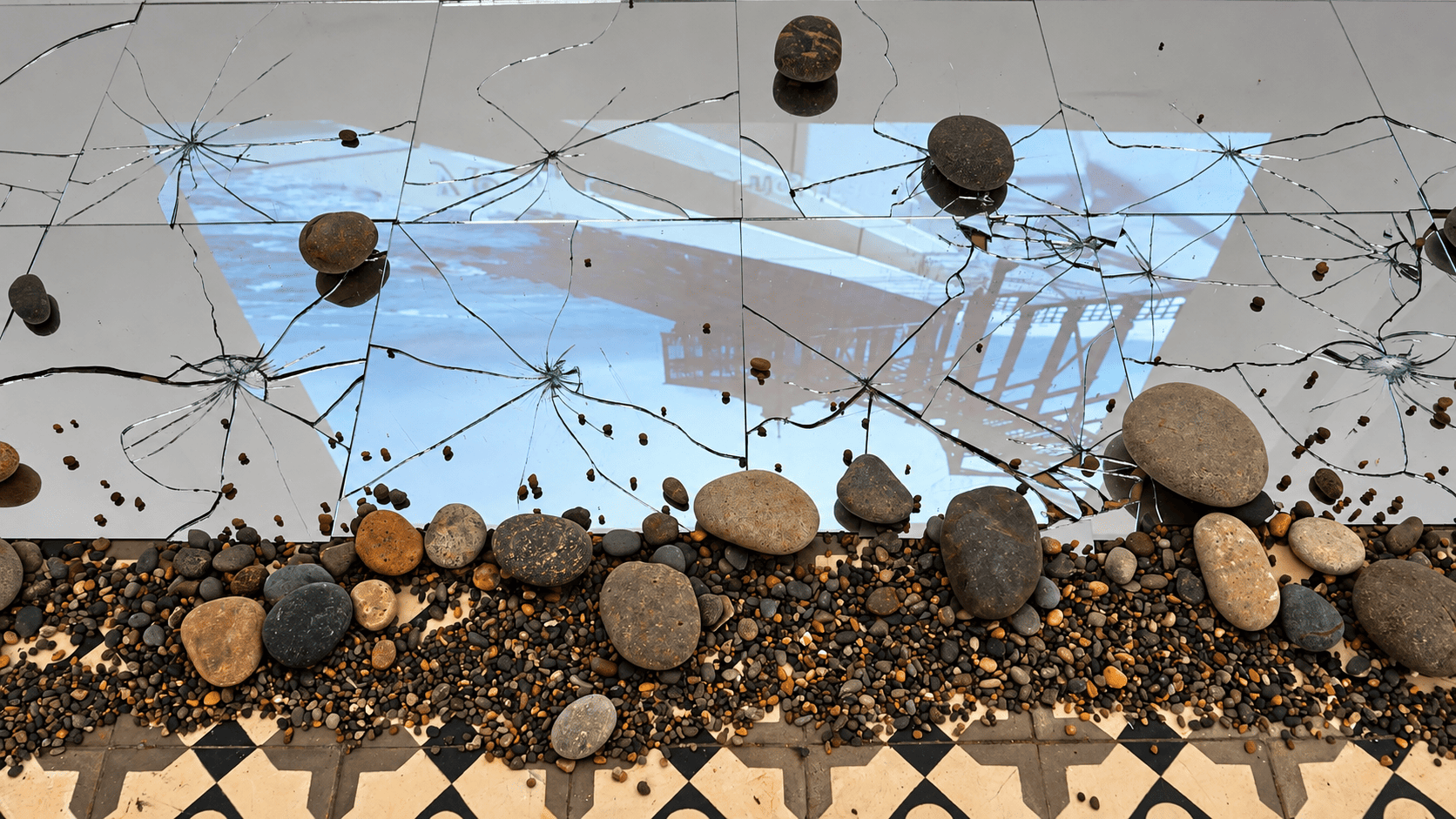
As visitors move past the flags and approach the projection, a defined surface of fragmented mirrors gradually comes into view. The installation evokes the sea, its power and fragility, partially reflecting the video images and visually connecting them with the collages. The sea thus becomes a distinctive and symbolic presence throughout the exhibition: the defining element of Callao’s landscape and a presence directly experienced by the artist during his residency. The fractured reflections, shifting with the light and projected images, reveal the vulnerability of a territory continually shaped by water and by forces beyond human control.
The exhibition invites us to recognise that no form is ever final. Every territory, community, and identity is the provisional result of the forces that move through it. Not everything that breaks disappears: sometimes it is precisely within the fracture, and the movement that produces it, that life finds a new form.